
The idea of both political and social reform as well as the concept of a ‘Greater Germany’ was so naive and unrefined in the immediate aftermath of the Napoleonic period that – despite both Liberals and Nationalists having the mutually inclusive ambition of a ‘unified’ German political entity – there was no consensus as to what form this state might take or how it should be organised and so on. The ideals of Liberals and Nationalists never sat at ease with the other despite the overarching belief in a ‘Germany’ of some sort as an end game.
Liberals – and indeed Nationalists at this stage – where overwhelmingly from the educated, upwardly mobile middle class. Few reformists at this stage were entertaining the concept of universal suffrage and were of the belief that only men of property and wealth should be eligible to vote. Intellectual discourse and debate were their preferred methods of articulation and attack as opposed to violent and militant revolution to uproot and change the status quo. Many would-be reformers primarily were focused on championing constitutional rights within their own states or cities as opposed to a sense of romantic ‘pan-German’ identity, with the attraction of nationalism ebbing somewhat from the forefront of Germanic political discussion the longer into the rear view mirror the period of Napoleonic occupation disappeared.
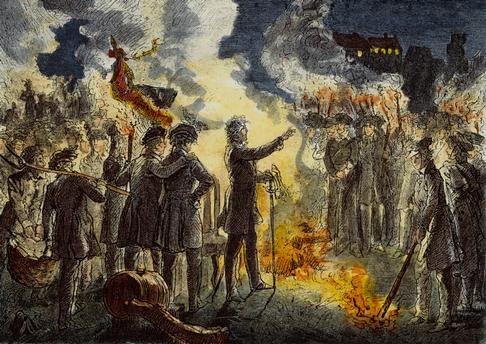
Yet the flames of nationalism never truly died out – especially amongst the vitality and vivacity of the youth – and student societies grew in popularity throughout the years after the Congress of Vienna. Our old friend Metternich added further attraction and intrigue to the notion of joining a student society for young Germans in this period with his overtly draconian and heavy-handed reaction to the murder of a Tsarist informer through implantation of The Carlsbad Decrees (1819). If theres one thing which is sure to attract rebellious and free-spirited youth to a cause its banning them from doing so or outlawing said cause/organisation, and this is exactly what Metternich did when he decreed that student societies should be banned and critical thinking to be severely censored and its proponents investigated.
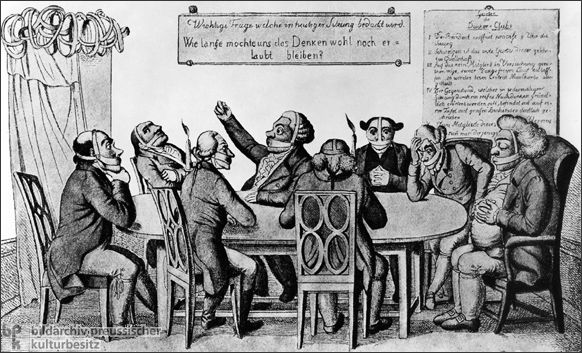
The repression and stifling hand of reactionary Austria smothered much real nationalist debate during the 1820s, but the seed which had been planted by Napoleon continued to take root and saw a renaissance in German cultural expression and folk festivals in the 1830s, which again Metternich sought to stamp out in his usual heavy handed way. Slowly, a divide was slowly widening within the Bundestag of the German Confederation, with a number of German states growing ever more tired and turned-off by the reactionary repression exercised by Austria. As has often been the case throughout history, it was a matter of money which blew the doors wide open for Nationalists within the German lands, and this time Austria was caught severely flat footed on the chase.
Key Takeaways from this section
Make sure you are secure in your knowledge of the following:
- What it was – generally – that the Liberal and Nationalist schools of thought wanted a future Germany to look like.
- The role of both Austria and Prussia in restricting the growth of German democracy and national identity
- The growth of the middle class and effects on aspirations of liberal reform
- The role of the student societies and their effect on German nationalist thought and ambitions
 Mr Wilson's History resources & musings